
Uganda Birding Safaris: The Ultimate Guide to Avian Diversity, Endemics, & Luxury Itineraries
Uganda stands as Africa’s undisputed avian capital. Packing over 1,090 verified bird species into a territory comparable in size to the United Kingdom, the country concentrates over 50% of Africa’s total bird diversity and roughly 11% of the world’s entire bird species population. For international birdwatchers, wildlife photographers, and serious naturalists, Uganda represents a unique biogeographical crossroads: the easternmost reach of the West African Guinea-Congo lowland rainforest meets the East African savannas, the high-altitude Albertine Rift montane ecosystems, and the vast papyrus wetlands of the Great Lakes Basin.
Why Uganda is Africa’s Premier Birdwatching Destination
Unlike other African safari destinations where birdwatching is merely a secondary activity to big-game drives, Uganda birding safaris offer world-class, dedicated avian circuits. The secret behind Uganda’s extraordinary bird density lies in its extreme habitat variance across a compact geographic footprint.
Within just a few hours of travel, an avian tourist can transition from searching for the prehistoric Shoebill Stork in papyrus swamps along Lake Victoria to tracking Central African rainforest species in Semliki, logging high-altitude Albertine Rift Endemics in Bwindi Impenetrable Forest, and recording savanna raptors in Queen Elizabeth National Park.
The High-Yield Avian Traveler Advantage
Avian tourists represent the highest-spending and longest-staying clientele in global tourism. Carrying high-end photography gear, telephoto lenses, and precision optics, birding enthusiasts routinely book extended 14-to-21-day circuits to maximize their lifelist counts.
At Country Sights Tours, our tailored birding expeditions pair guests with specialized bird guides, custom 4×4 Land Cruisers, and premier eco-lodges across Uganda’s core Important Bird Areas (IBAs).
Key Target Species: Biome Specialists & Rare Endemics
While over a thousand species inhabit Uganda, certain key target birds draw global travelers across oceans. A successful birding itinerary prioritizes three primary species clusters:
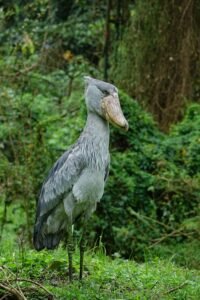
1. The Prehistoric Shoebill Stork (Balaeniceps rex)
The iconic, whale-headed Shoebill Stork is East Africa’s most sought-after solitary avian species. Standing up to 1.5 meters tall with a bulbous, sharp-hooked bill engineered to capture lungfish and catfish, this swamp specialist inhabits dense papyrus beds. The early morning canoe searches in Mabamba Swamp offer a 95%+ success rate for viewing and photographing Shoebills at close range.
2. The Albertine Rift Endemics
The Albertine Rift—a dramatic mountain corridor stretching along Uganda’s western border—is recognized globally as a critical Endemic Bird Area (EBA). Of the restricted-range species defining this rift, 23 to 24 occur inside Uganda’s protected national parks:
- African Green Broadbill (Pseudocalyptomena graueri): A tiny, jewel-toned bird restricted to high-elevation oak canopy forests around Mubwindi Swamp in Bwindi Forest.
- Shelley’s Crimsonwing (Cryptospiza shelleyi):** One of the world’s rarest and most elusive finches, inhabiting dense montane undergrowth.
- Rwenzori Turaco (Gallirex johnstoni):** A striking, crimson-winged canopy dweller found in the high bamboo and Hagenia zones of Bwindi, Mgahinga, and the Rwenzori Mountains.
- Other Top Albertine Endemics: Red-throated Alethe, Archer’s Robin-Chat, Kivu Ground Thrush, Regal Sunbird, Grauer’s Swamp Warbler, Handsome Francolin, and Rwenzori Batis.
3. Guinea-Congo Biome Specialists
The lowland tropical rainforests of western Uganda—specifically Semliki National Park and the Budongo Forest Reserve—represent the easternmost extension of the West African Congo Basin rainforest. Over 35 species found in these forest reserves occur nowhere else in East Africa.
- Green-breasted Pitta (Pitta reevesi): A colorful, ground-dwelling forest bird famous for its brief, pre-dawn display flights in Kibale Forest.
- Lowland Forest Hornbills: Piping Hornbill, Black-casqued Wattled Hornbill, White-thighed Hornbill, and Red-billed Dwarf Hornbill.
- Rare Floor Dwellers: Congo Serpent Eagle, Nkulengu Rail, and Spot-breasted Ibis inside Semliki.
Top 7 Important Bird Areas (IBAs) in Uganda
Planning an efficient birding safari requires routing through Uganda’s prime IBAs. The table below outlines habitat profiles, key targets, and species density across the top 7 reserves:
| Destination | Primary Habitat Type | Key Target Species | Species Count |
|---|---|---|---|
| Bwindi Impenetrable NP | Montane Rainforest (1,160m – 2,600m) | African Green Broadbill, 23 Albertine Endemics | 350+ Species |
| Mabamba Wetland Bay | Papyrus Swamp & Lake Victoria Basin | Shoebill Stork, Papyrus Gonolek, Blue-headed Coucal | 300+ Species |
| Kibale National Park | Mid-Elevation Tropical Rainforest | Green-breasted Pitta, African Grey Parrot, Owlets | 375+ Species |
| Semliki National Park | Lowland Guinea-Congo Rainforest | Congo Serpent Eagle, Nkulengu Rail, Piping Hornbill | 440+ Species |
| Royal Mile (Budongo) | Semi-Deciduous Primary Forest | Chocolate-backed Kingfisher, Ituri Batis, Crombecs | 360+ Species |
| Murchison Falls NP | Savanna, Borassus Palm & Nile Delta | Shoebill, Abyssinian Ground Hornbill, Silverbird | 450+ Species |
| Kidepo Valley NP | Semi-Arid Savanna & Dry Mountain | Karamoja Apalis, Ostrich, Abyssinian Scimitarbill | 465+ Species |
The Grand 21-Day Uganda Birding & Wildlife Circuit
To maximize total lifelist additions (typically achieving between 450 and 550 logged species), Country Sights Tours recommends this comprehensive 21-day grand circuit linking wetlands, Albertine forests, savanna channels, and primary rainforests.
Day 1: Arrival in Entebbe & Entebbe Botanical Gardens
Arrival at Entebbe International Airport. Afternoon birding introduction along the shores of Lake Victoria at the Entebbe Botanical Gardens. Key Targets: Great Blue Turaco, Ross’s Turaco, Bat Hawk, Orange Weaver, African Grey Parrot.
Day 2: Mabamba Swamp Shoebill Excursion & Transfer to Lake Mburo
Early morning wooden canoe excursion in Mabamba Swamp targeting the Shoebill Stork. Mid-day transfer southwest to Lake Mburo National Park. Key Targets: Shoebill Stork, Papyrus Gonolek, Blue-breasted Bee-eater, White-winged Warbler.
Day 3: Lake Mburo Boat Cruise & Night Drive
Morning boat safari along Lake Mburo; afternoon savanna game and bird drive; evening nocturnal search. Key Targets: African Finfoot, Red-faced Barbet, White-backed Night-Heron, Tabora Cisticola.
Day 4: Transfer to Mgahinga Gorilla National Park via Echuya Forest
Scenic journey through the Kigezi Highlands. High-altitude birding stop at Echuya Forest Reserve bamboo zone. Key Targets: Archer’s Robin-Chat, Stripe-breasted Tit, Doherty’s Bushshrike, Mountain Masked Apalis.
Day 5: Mgahinga Sabinyo Gorge Trail
Full-day high-altitude trek along the Sabinyo Gorge Trail in the Virunga Volcanoes. Key Targets: Rwenzori Turaco, Shelley’s Crimsonwing, Kivu Ground Thrush, Lagden’s Bushshrike.
Day 6: Transfer to Bwindi Impenetrable National Park (Ruhija Sector)
Ascent into the high-elevation ridges of Bwindi Forest at Ruhija. Key Targets: Handsome Francolin, Mountain Sooty Boubou, Cinnamon Bracken Warbler.
Day 7: Full Day Trek to Mubwindi Swamp (Bwindi High Altitude)
Deep forest descent into Mubwindi Swamp inside Bwindi Impenetrable. Key Targets: African Green Broadbill, Grauer’s Swamp Warbler, Yellow-eyed Black Flycatcher, Dwarf Honeyguide.
Day 8: Ruhija to Buhoma via “The Neck” Forest Corridor
Roadside birding through the mid-elevation forest connector linking Ruhija to Buhoma. Key Targets: Black Bee-eater, Cassin’s Flycatcher, Chapin’s Flycatcher, Fine-banded Woodpecker.
Day 9: Buhoma Waterfall Trail (Optional Gorilla Trekking Combo)
Full day exploring Buhoma’s primary forest trail network, with the option to integrate a 1-hour gorilla tracking briefing and permit trek. Key Targets: Short-tailed Warbler, Kivu Ground Thrush, Black-billed Turaco.
Day 10: Buhoma to Queen Elizabeth National Park (Ishasha Tree-Climbing Lion Sector)
Drive north out of Bwindi into the savanna plains of Queen Elizabeth National Park. Key Targets: Tree-climbing Lions, Flappet Lark, Black-bellied Bustard, Stout Cisticola.
Day 11: Kasenyi Plains & Kazinga Channel Boat Safari
Morning savanna game drive across Kasenyi; afternoon 2-hour boat launch on the Kazinga Channel. Key Targets: African Skimmer, Martial Eagle, Pink-backed Pelican, Water Dikkop.
Day 12: Transfer to Kibale Forest & Bigodi Wetland Sanctuary
Drive north past the Rwenzori foothills to Kibale Forest; afternoon wetland walk in Bigodi. Key Targets: Great Blue Turaco, Papyrus Gonolek, White-spotted Flufftail, Yellow-spotted Barbet.
Day 13: Kibale Green-breasted Pitta Search & Chimpanzee Tracking
Pre-dawn forest trek for Green-breasted Pitta display flights; morning chimpanzee tracking walk; afternoon birding. Key Targets: Green-breasted Pitta, African Grey Parrot, Red-chested Owlet.
Day 14: Transfer to Semliki National Park
Descent into the Western Rift Valley floor to Sempaya inside Semliki. Key Targets: Spot-breasted Ibis, Nkulengu Rail, African Wood Owl, Black-shouldered Nightjar.
Day 15: Full Day Kirumia Trail (Semliki Lowland Rain Forest)
All-day birding trek along the famous Kirumia Trail crossing ironwood and palm forests. Key Targets: Congo Serpent Eagle, Piping Hornbill, Red-billed Dwarf Hornbill, Lyre-tailed Honeyguide.
Day 16: Semliki to Hoima via Bugoma Forest Escarpment
Drive northeast along the Albertine Rift escarpment past forest reserves. Key Targets: Nahan’s Francolin, Black-collared Lovebird, Brown-crowned Eremomela.
Day 17: Budongo Forest (The Royal Mile)
Full-day birding along the canopy-covered Royal Mile avenue inside Budongo Forest. Key Targets: Chocolate-backed Kingfisher, Ituri Batis, Blue-breasted Kingfisher, Lemon-bellied Crombec.
Day 18: Budongo to Murchison Falls National Park
Drive north through Kaniyo Pabidi forest entering Murchison Falls National Park. Key Targets: Puvel’s Illadopsis, Fire-crested Alethe, Red-throated Bee-eater, Abyssinian Ground Hornbill.
Day 19: Buligi Savanna Game Drive & Nile Delta Launch Cruise
Early morning savanna drive across the Buligi circuit; afternoon boat cruise to the Lake Albert Delta for Shoebill tracking. Key Targets: Shoebill Stork, Rock Pratincole, Silverbird, Denham’s Bustard.
Day 20: Top of Murchison Falls Visit & Transfer to Ziwa Rhino Sanctuary
Visit the explosive top of Murchison Falls; transfer south to Ziwa Rhino Sanctuary. Key Targets: Bat Hawk, White-crested Turaco, Bruce’s Green Pigeon, Heuglin’s Francolin.
Day 21: Ziwa Swamp Canoe Trek & Return to Entebbe
Final early morning swamp canoe search at Ziwa; transfer back to Entebbe for outbound international flights. Key Targets: African Broadbill, Giant Kingfisher, Marsh Tchagra.
Gear & Technical Recommendations for Avian Photographers
Avian optics and photography gear require careful consideration when packing for tropical forest understories and open savanna light levels:
- Binocular Specs: 8×42 or 10×42 waterproof roof-prism binoculars. An 8x magnification provides a wider field of view and vastly superior light gathering inside dark rainforest canopies like Kibale and Bwindi.
- Camera Lenses: Fast prime or zoom lenses in the 400mm to 600mm equivalent focal range. Due to low light beneath multi-tiered jungle canopies, lenses with fast maximum apertures (f/4 or f/5.6) combined with full-frame camera bodies capable of clean high-ISO performance are essential.
- Monopods over Tripods: While a tripod is ideal for open wetland hides (like Mabamba or Ziwa), a lightweight carbon-fiber monopod is far more maneuverable along narrow, root-filled forest trails.
- Weather Protection: Sudden rain squalls can occur year-round in tropical rainforests. Bring heavy-duty dry bags and silicone rain covers for all camera bodies and telephoto lenses.
Seasonality & Trip Planning Essentials
When is the Best Time for a Birding Safari in Uganda?
Uganda offers productive birding 365 days a year, but distinct windows offer unique advantages:
- Palaearctic Migrant Season (November to April): Millions of migratory birds arrive from Europe and Asia. Species counts peak during this window as wintering waders, warblers, and raptors mix with resident species.
- Breeding & Display Season (June to August & December to February): The primary dry seasons offer clear forest trails, easier driving conditions, and active courtship displays (such as the Green-breasted Pitta’s pre-dawn display flight).
Why Book with Specialized Birding Operators?
A successful birdwatching safari demands far more than a standard driver-guide. At Country Sights Tours, our birding expeditions feature:
- Certified Specialist Bird Guides: Guides who possess intimate knowledge of territorial vocalizations, call-playback rules, and micro-habitat adjustments.
- Custom 4×4 Land Cruisers: Vehicles fitted with pop-up photography roofs, inverter charging ports for camera batteries, and fridge units for cold water.
- Seamless Permit Management: Pre-booked permits for restricted birding sites, Mabamba canoe operations, gorilla tracking, and chimp habituation sessions.
Frequently Asked Questions (FAQs)
How many bird species can I log on a 14-to-21-day Uganda safari?
An experienced birdwatcher traveling with a professional Country Sights Tours bird guide can realistically log between 400 and 550 species on a 3-week trip covering Mabamba, Bwindi, Semliki, Budongo, and Murchison Falls.
Is gorilla trekking easy to combine with a birdwatching safari?
Yes! Bwindi Impenetrable National Park and Mgahinga Gorilla National Park are premier destinations for both mountain gorillas and Albertine Rift endemic birds. Gorilla permit treks are easily integrated into your stay at Buhoma, Ruhija, or Mgahinga without missing prime birding windows.
What is the single best place to see the Shoebill Stork in Uganda?
Mabamba Swamp on Lake Victoria offers the highest success rate (over 95%) for locating and photographing the Shoebill Stork in its natural habitat via traditional wooden canoes.
Ready to Plan Your Ultimate Uganda Birding Expedition?
Contact the birding specialists at Country Sights Tours today. We will design your custom 14-to-21-day itinerary, secure your permits, and match you with Uganda’s top-ranked professional bird guides.